


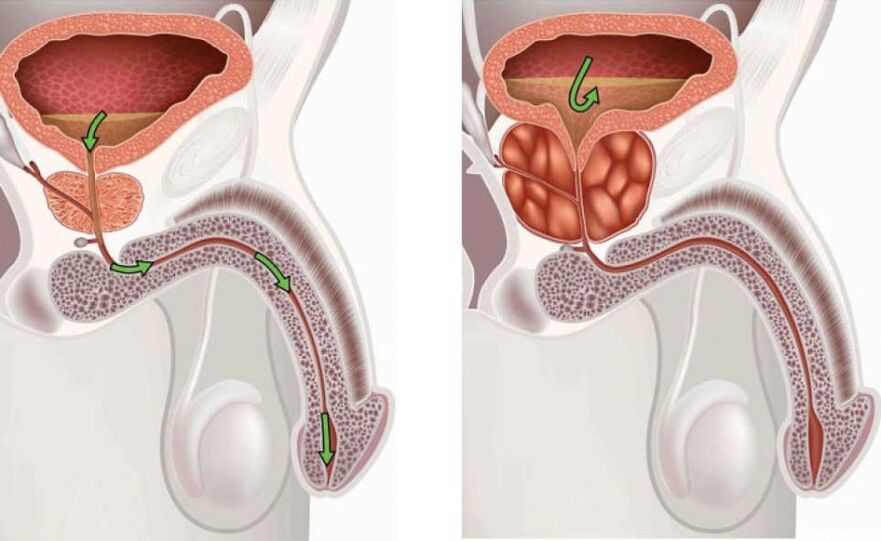
A cross-country survey showed that 2-10% of adult men experience symptoms suggestive of prostate problems during their lifetime.
Any urinary disorder is an alarm bell and self-medication in this case should be excluded.However, problems are not always specifically associated with prostatitis.
Go to the doctor
Our articles are written with love for evidence-based medicine.We cite reputable sources and seek reviews from reputable physicians.But remember: the responsibility for your health falls on you and your doctor.We do not write prescriptions, we give recommendations.Whether you support our point of view or not is up to you.
How does the prostate work?
The prostate, or prostate gland, is a walnut-shaped organ located just below the bladder.Between the halves of the "nut" passes the urethra, a tube through which urine is removed from the bladder and sperm from the testicles.
The main task of the prostateconsists in the production of a secretion that is part of the seminal fluid.Thanks to this secret, the spermatozoa are able to move.The second task of the prostate is contraction, ensuring ejaculation, that is, ejaculation.
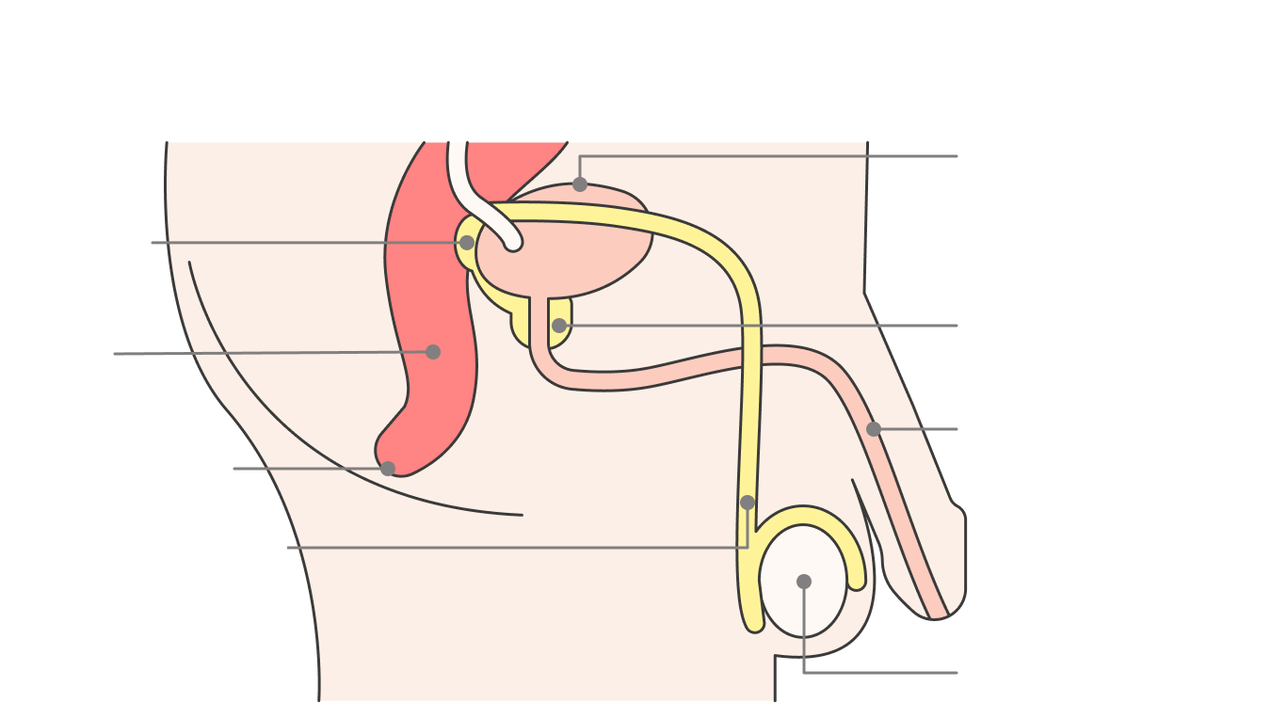
Near the prostate are the seminal vesicles, which are connected to the vas deferens, through which the sperm leaves the genitals.The seminal vesicles produce the liquid part of the sperm and store the secretions of the prostate.
Prostate secretion is a mixture of citric acid and enzymes.This fluid liquefies the sperm, which enters the urethra from the vas deferens of the testicles.
Prostate problems do not always lead to erectile problems
In the vast majority of cases, sexual dysfunction is not associated with prostate problems because there is no physical connection between the prostate and the erection mechanism.
But urination disorder, discomfort from incomplete emptying of the bladder, pain or discomfort associated with inflammation, lead to a nervous and embarrassed person.Because of this, psychological problems arise - as a rule, they negatively affect erection.
How is prostatitis?
Prostatitis is an inflammation of the prostate gland that is associated with pathogenic microbes or other non-infectious causes.Sometimes the inflammation also affects the seminal vesicles - this is called vesiculitis.
At the same time, inflammation of the prostate gland does not always lead to pain and problems with urination, and the presence of unpleasant symptoms is not necessarily associated with inflammation of the gland.
To avoid confusion, urologists around the world use the classification proposed by the US National Institute of Diabetes and Digestive and Kidney Diseases, or NIDDK.
To simplify a little, the classification divides prostatitis into bacterial and abacterial, that is, not related to bacteria.This approach helps doctors make the important decision whether to prescribe antibiotics and additional medications.It is wrong to give antibiotics to all patients with suspected prostatitis because non-microbial forms of prostatitis are more common than bacterial ones.Taking unnecessary antibiotics is harmful to your health.
The NIDDK classification identifies five forms of prostatitis.
Acute bacterial prostatitis.A disease that is most often caused by pathogens typical of urinary tract infections: for example, E. coli, Klebsiella and Enterobacter.
As a rule, the disease begins suddenly and is accompanied by a general deterioration of health.The temperature rises to 38-39 °C, with some people feeling weakness, severe pain or burning in the perineum, scrotum or anus, lower abdomen and sometimes in the muscles.Some people experience pain during ejaculation.Sometimes bacterial prostatitis causes frequent, difficult and painful urination.
Chronic bacterial prostatitis.This disease can also be caused by the typical microbes of acute prostatitis.The disease is considered chronic if the symptoms last at least three months.
Symptoms of chronic bacterial prostatitis are similar to those of acute prostatitis, but may not be as severe or less severe.There is usually no fever or weakness, the pain in the lower abdomen is more aching than sharp, but it is difficult to start urinating and empty the bladder completely.In addition, unpleasant symptoms may disappear temporarily and appear again after a while.
Any man can get acute and chronic bacterial prostatitis.But the people at greatest risk are those who have a higher risk of exposure to germs: those who have sex, especially anal sex, without a condom, patients with a urinary tract infection, and people who have recently had surgery or a prostate biopsy.
Chronic bacterial prostatitis associated with inflammation.The symptoms of nonbacterial inflammatory prostatitis are very similar to acute and chronic bacterial prostatitis.In this case, there are no pathogenic bacteria in the sperm, prostate gland and urine, but the concentration of leukocytes will be high - this indicates inflammation of the prostate gland.
Chronic abacterial prostatitis, or chronic pelvic pain syndrome, not associated with inflammation.Symptoms also resemble acute and chronic bacterial prostatitis.At the same time, there are no pathogenic bacteria and a high concentration of leukocytes in semen, prostate gland and urine - this indicates that the prostate gland is not inflamed.
In the case of non-bacterial forms of prostatitis, it is not always possible to determine which cause leads to the development of the disease.Risk groups are also difficult to define.
Asymptomatic inflammatory prostatitis.This form of the disease does not cause any concern.Most often, the inflammation is discovered incidentally when the patient is being examined for other problems, such as infertility.
How does prostatitis differ from prostate adenoma?
In about 8% of men after the age of 40, the prostate begins to increase in size - this is called prostate adenoma, or benign prostatic hyperplasia.An enlarged prostate compresses the urethra and this can cause problems with urination: a very frequent urge to go to the toilet or leakage of urine.Faced with the symptoms of an adenoma, some patients may assume they have prostatitis.
While some symptoms of prostatic hyperplasia may indeed resemble prostatitis, they are not the same thing.Prostatitis is inflammation of the prostate gland.And an adenoma is an age-related uncontrolled proliferation of prostate cells that is not accompanied by inflammation.
An adenoma can cause serious discomfort, so if you have problems urinating, it is important to consult a urologist as soon as possible.However, adenoma is still not as dangerous as prostatitis, because it does not increase the risk of developing cancer.
How often is chronic bacterial prostatitis diagnosed?
According to general literature data, acute bacterial prostatitis occurs in 5-10% of cases, and chronic bacterial prostatitis - in 6-10% of cases.Moreover, both variants of chronic abacterial prostatitis account for 80-90% of all cases of the disease.
If we do a massive microscopic examination of the prostate gland, we will find certain signs of inflammation in all men over 40 without exception.But this has nothing to do with the diagnosis of "chronic bacterial prostatitis".
There are many urological diseases that can be hidden behind the mask of chronic prostatitis and some of them are quite serious and require immediate treatment.Therefore, I recommend that all patients with symptoms reminiscent of prostatitis undergo a more detailed examination, which will clarify the diagnosis.
How is prostatitis diagnosed?
From the patient's perspective, the symptoms of bacterial and nonbacterial prostatitis are very similar.Without consultation with a urologist and special tests, it is impossible to distinguish one form of prostatitis from another and to receive quality treatment.You can get an appointment with a urologist for free under your compulsory medical insurance policy or make an appointment with a doctor in a private clinic.
The main task of a urologist visiting a patient with suspected prostate is to rule out other prostate diseases, such as cancer, and determine what form of the disease the person has.It is very important to distinguish chronic pelvic pain syndrome from bacterial prostatitis with a confirmed or suspected pathogen.Here's what a doctor needs to do to figure it out.
Ask the patient about symptoms and health.To gather more information, your doctor may suggest answering questions from a questionnaire called the Chronic Prostatitis Symptom Index.In some cases, in order not to waste time at the meeting, it makes sense to print the questionnaire and fill it in advance.
Perform a physical examination.The doctor will examine the patient, paying special attention to the groin area.If there are swollen and painful lymph nodes in the groin, this increases the likelihood that there is actually an inflammatory process in the body.Typically, the examination includes a digital rectal examination, which allows the doctor to assess the size, shape and condition of the prostate.The study helps to understand whether the prostate is enlarged in size.If the gland is painful to the touch, it is most likely inflamed.
Is it possible to do without a digital rectal examination?
Digital rectal examination and prostate massage are not the most pleasant procedures.In acute inflammation, this can cause pain.Some patients are so eager to avoid these procedures that they refuse to make an appointment with a urologist at all.
Digital rectal examination is a diagnostic method, but massaging the prostate gland through the rectum is done to obtain material for laboratory analysis - prostate secretion.If secretion cannot be obtained, the doctor may replace the prostate secretion test with either a first part urinalysis, or a two- and three-cup urinalysis.These tests can roughly determine where the problem area is in the urinary tract.
Sometimes, instead of this examination, a spermogram analysis is prescribed for the same purpose.It helps to understand if prostatitis is part of male reproductive gland infections and gives information about the quality of the ejaculate.In addition, counting leukocytes in the ejaculate makes it possible to differentiate between inflammatory and non-inflammatory forms of chronic pelvic pain syndrome.
If a patient is concerned about an upcoming digital prostate exam or massage, I would suggest discussing this with their healthcare provider.Perhaps the analysis of prostate secretions, which requires massage, can be replaced by a urine or semen analysis.
Describe blood, urine, and prostate secretion tests.The diagnostic standard includes a microscopic examination of prostate secretion, a general blood test, a general urine test with a sediment microscope, as well as a microbiological examination of urine and prostate secretion.
During microbiological studies, the patient's biological material is placed in a nutrient medium and it is observed what bacteria grow in it - this allows the diagnosis to be clarified.You can be tested in a private clinic for money or free of charge under compulsory medical insurance.
Other tests and examinations - for example, a test for the concentration of total prostate-specific antigen (PSA) in the blood and transrectal ultrasound of the prostate (TRUS) - are usually not done if prostate is suspected.In some cases, TRUS of the prostate gland can reveal fibrosis, that is, a scar or foci similar to a malignant tumor, but such studies are not indicated for all patients without exception.
How is prostatitis treated?
Treatment depends on the type of prostatitis.If the inflammation is caused by bacteria, the doctor will prescribe antibiotics.And if bacteria have nothing to do with it, you will need medications to help cope with the unpleasant symptoms of the disease.
Acute bacterial prostatitisthey start treatment without waiting for test results - this is called empiric antibacterial therapy.In this approach, antibiotics are prescribed based on knowledge of which microbes most commonly cause prostate infection.
As a rule, patients are prescribed antibacterial drugs that penetrate well into the prostate tissue and act on the most "known" pathogens of prostatitis and genitourinary infections.
Those people who feel more or less normal and are treated at home usually take antibiotic tablets.And patients with high fever who are treated in the hospital are more often prescribed antibiotic injections.With this treatment, in most patients with acute prostatitis, the temperature and pain decrease within the second to sixth day after starting the medication.
When the patient's temperature returns to normal and signs of inflammation disappear, the doctor can switch the patient from injections to tablets.The total duration of antibiotic treatment is usually about 2-4 weeks.
Sometimes prostate massage is used not only as a diagnostic method, but also as a therapeutic technique.It was once thought that this could help release excess secretions accumulated in the gland and thereby reduce its swelling.However, today most experts have reached a consensus that prostate massage should be avoided for bacterial prostatitis.This is not only painful and useless, but it can also worsen the course of the disease, because as a result of the massage, bacteria can enter the neighboring, uninfected tissues.
Chronic bacterial prostatitisit is also treated with antibiotics that act on gram-negative bacteria.Fluoroquinolones are commonly used for treatment;these antibiotics are considered quite safe.But if the doctor suspects that prostatitis is caused by other microorganisms, he can prescribe additional antibacterial drugs without waiting for the results of the analysis.
With chronic prostatitis, antibiotics should be taken longer than with acute prostatitis.In accordance with the recommendations of urologists, they are prescribed in a course lasting 4-6 weeks.
Chronic bacterial prostatitisis not associated with bacteria, antibiotics are prescribed to patients with this disease only if, in addition to prostatitis, they also have a urinary infection.
Since it is not clear what exactly causes abacterial prostatitis, treatment is mainly aimed at relieving pain during urination.To achieve this, doctors prescribe alpha-1 blockers - medications that help relax the prostate muscles that press on the urethra.If the pain persists, the doctor may prescribe non-steroidal anti-inflammatory drugs.The dose is selected individually for each patient.
Some patients with abacterial prostatitis benefit from cognitive behavioral therapy, which is the name given to sessions with a psychologist during which a person learns to cope with pain without medication.However, there is no scientific evidence for the effectiveness of psychological help for bacterial prostatitis.
Studies in which researchers have tried to prove the effectiveness of other interventions, such as acupuncture, electromagnetic chair therapy, prostate massage or transrectal thermotherapy, have been poorly designed and of very short duration - usually less than 12 weeks.So it is impossible to say whether all this helps or not.
How to avoid prostatitis: prevention
The main cause of discomfort in the prostate gland is a sedentary lifestyle and lack of regular sex life.Doctors believe that the highest chances of avoiding prostatitis are in men who:
- Practice safe sex regularly.
- Do moderate exercise regularly.
- Avoid hypothermia.
- After reaching the age of 40, they undergo an annual urological examination.
Where is it better to treat prostatitis - in a public or private clinic?
The most important thing is to follow the principles of evidence-based medicine when diagnosing and treating prostatitis.It just depends on the doctor - and it doesn't matter where exactly he works.
Unfortunately, doctors in private clinics do not always respect the standards of medical care.This can lead to overdiagnosis and unnecessary treatment, leaving the patient at risk of overpayment.In a public medical organization, the likelihood of meeting all diagnostic and treatment standards is higher.But patients should take into account that a complete examination will take longer - sometimes significantly longer than during an examination in a private clinic.
Remember
- Problems with the urinary tract in men are frequent, but not always caused by prostatitis.To understand what exactly is happening to a person, you need to undergo a thorough examination.
- Prostate problems rarely lead to erectile difficulties.Usually, with prostatitis, it weakens due to psychological problems that arise against the background of unpleasant symptoms.
- Not every form of prostatitis is caused by bacteria: in 80-90% they have nothing to do with it.If a person with suspected prostatitis is prescribed antibiotics without additional tests, this is bad.Before taking them, it makes sense to consult with another doctor.
- A person with acute or chronic prostatitis may be prescribed a prostate massage to collect glandular secretions for analysis.
- The best way to prevent prostatitis is protected sex, a healthy lifestyle and after 40 years regular urological examinations by a doctor.